Fungal chemistry built for complex waste.
The FungiBio™technology was developed by SWT Consulting and Clean Harbors Canada Inc. to degrade Polyaromatic Hydrocarbons and other recalcitrant environmental contaminants. The FungiBio™technology was so successful at degrading these compounds that we began translating that capability to textile systems. All fungi used in this work are the exclusive property of FungiBio™Technologies Inc.’s fungal library.
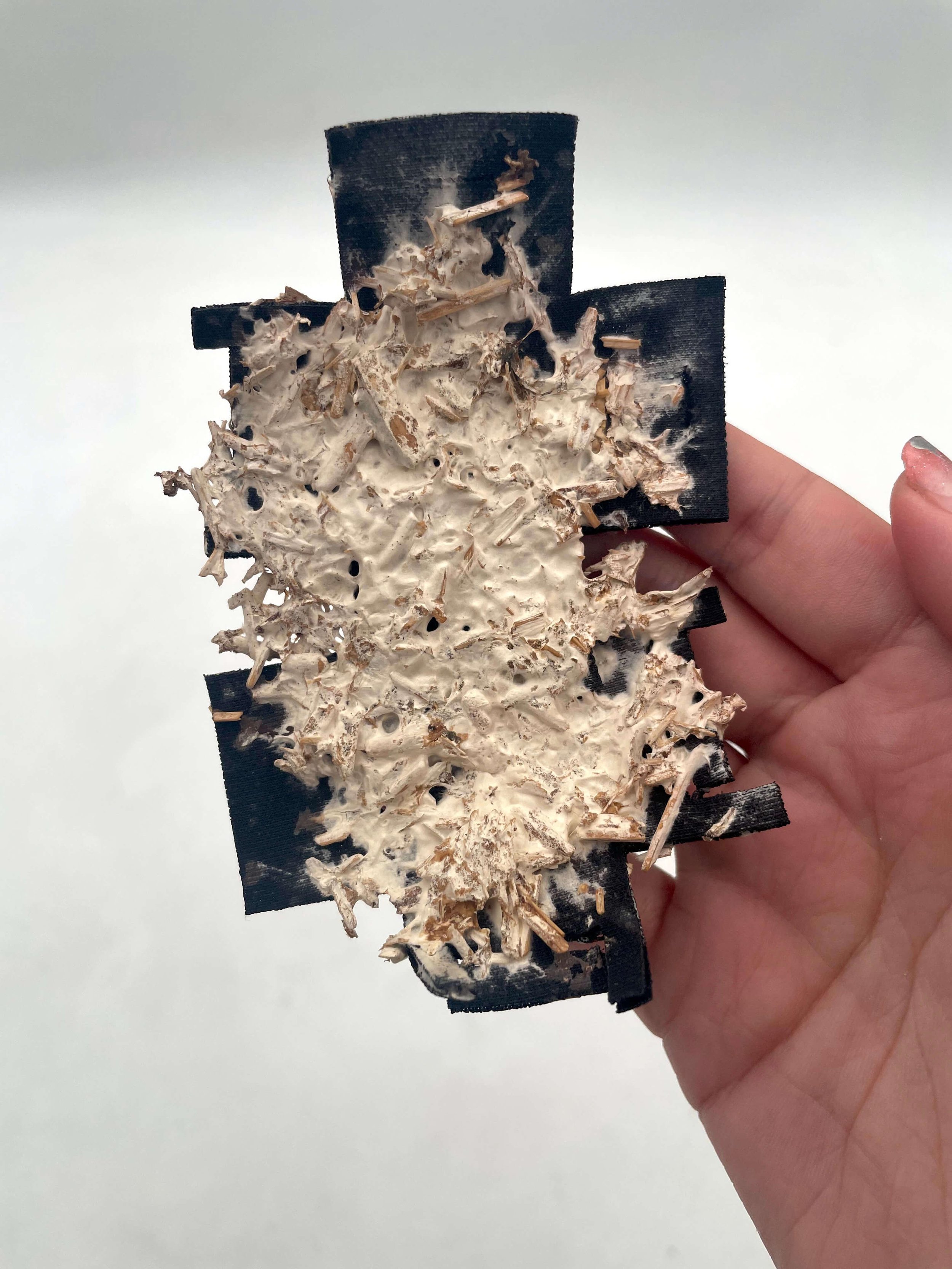
The relationship between PAH degradation and textile degradation is one of the strongest scientific foundations for the FungiBio™ platform. Although the substrates are very different, the fungi employ many of the same extracellular oxidative enzyme systems.
Organic complexity
Oxidative enzyme systems
Laccase, lignin peroxidase, heme peroxidase, and manganese peroxidase provide the scientific basis for the degradation of aromatic dyes, finishes, and persistent organic structures.
Polymer access
Hydrolytic enzyme systems
Esterase and cutinase activities provide access to ester-linked polymers such as polyesters, alongside cellulase systems for natural fibers.
Contaminant management
One waste stream, two challenges
The platform is designed to evaluate organic transformation and heavy-metal management together—critical for textiles carrying both dyes and metal-based fixatives.
White Paper available upon request. “Relationship Between the Enzymatic Degradation of Polycyclic Aromatic Hydrocarbons (PAHs) and End-of-Life Textile Fibers by White-Rot Fungi”